
 EN
EN  ES
ES  PT
PT  RU
RU  FR
FR When we test adhesive formulas in our Zhejiang lab, we see distinct behaviors between different compounds that impact your daily operations. I often tell clients that choosing the right tape isn’t about finding the cheapest roll. It is about matching the chemical properties of the glue to your specific machine and box type.
Hot melt tape is primarily used for automated carton sealing and packaging recycled corrugated boxes due to its exceptional peel strength. Unlike acrylic tape, which focuses on surface tack, hot melt adhesive utilizes a synthetic rubber compound that provides nearly double the adhesion force on steel plates, ensuring heavy cartons stay closed under stress.
Let’s look at the engineering behind this powerful adhesive to see if it fits your production line.
What is Hot Melt Tape? The “Muscle” of the Packaging World
We mix synthetic rubber resins daily, and I often tell clients this isn’t just sticky plastic. It acts like a liquid anchor when applied under pressure.
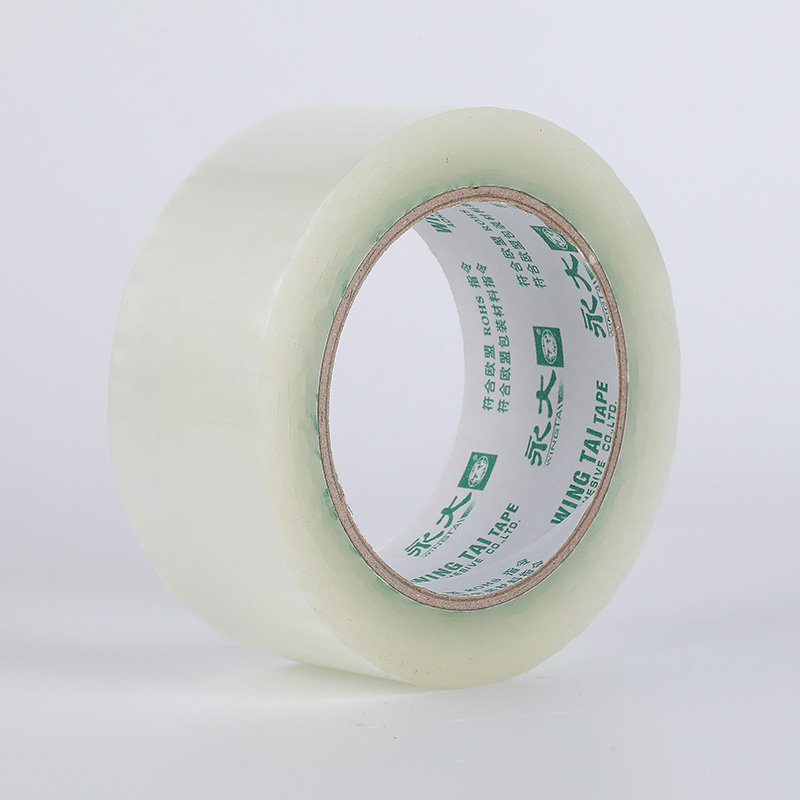
Hot melt tape is a pressure-sensitive adhesive made from a Biaxially Oriented Polypropylene (BOPP) backing coated with thermoplastic synthetic rubber. While acrylic tapes may feel stickier to the touch, hot melt tape offers significantly higher peel strength and a smoother unwind, making it the heavy-lifter for industrial shipping operations where bond security is paramount.
The Science of Peel Strength
To understand why we call this the “muscle” of packaging tapes, you have to look at our lab data. Many buyers confuse “Tack” (how quickly it grabs) with “Peel Strength” (how hard it is to pull off).
In our testing facility, we perform the standard 180-degree peel test on stainless steel plates. The results are consistent:
- Acrylic Tape: Good initial grab, but lower resistance when pulled.
- Hot Melt Tape: The peel strength is typically two times higher than that of acrylic tape.
This means that while acrylic might feel tacky on your finger, hot melt rubber digs in and holds on with much greater force once applied. This high peel strength is why the tape doesn’t “pop” open when a heavy box creates tension on the flaps.
The “Easy Unwind” Benefit
This is a detail that factory workers appreciate immediately. Hot melt tape has a very consistent release coating, which results in a low “unwind force.”
When you pull standard acrylic tape off the roll, it often makes a loud, high-pitched screeching noise and resists the pull. Hot melt tape, by comparison, glides off the roll smoothly and quietly. In a warehouse where hundreds of boxes are sealed per hour, this lower unwind force reduces wrist fatigue for your packers and keeps the noise level down.
Structural Comparison
Here is how the basic composition differs from what you might be used to:
Table 1: Adhesive Composition Analysis
| Feature | Hot Melt Tape (Synthetic Rubber) | Acrylic Tape (Water-Based) |
|---|---|---|
| Base Material | Thermoplastic Polymer | Acrylic Polymer Emulsion |
| Primary Strength | High Peel Strength (2x Acrylic) | High Initial Tack |
| Odor | Mild rubber scent | Vinegar or chemical scent |
| Unwind Experience | Smooth / Quiet (Low Force) | Jerky / Loud (High Force) |
The “One-Strip” Advantage: Why Peel Strength Matters
Our clients often complain about labor costs, so we demonstrate how a single strip of our rubber-based tape outperforms three strips of weaker alternatives.
The superior peel strength of hot melt tape allows for a single “one-strip” seal down the center seam, securing the box completely. In contrast, standard acrylic tapes often require an “H-shape” sealing method to compensate for lower holding power, which triples material usage and slows down manual packing teams.
The Economics of Sealing Methods
This is the most common conversation I have with procurement managers like Mr. Kim. You might see a lower price tag on a roll of acrylic tape and think you are saving money. However, you need to watch how your workers apply it.
Because acrylic glue has lower peel strength, warehouse staff often feel insecure about the seal. To compensate, they apply tape along the center seam, and then two more strips along the edges. This is the “H-Shape” method. It wastes tape and time.
With hot melt tape, the sheer holding power is incredibly high. The moment your packer applies that single strip, the box is locked. The flaps cannot slide past each other because the rubber adhesive resists the peeling force generated by the box’s natural tendency to spring open.
Calculating the Real Cost
If you switch to a stronger adhesive, you can mandate a “One-Strip Policy” in your SOP (Standard Operating Procedure). Even if the roll costs 15% more, you use 66% less tape per box compared to the H-Method.
Efficiency Gains
- Speed: Applying one strip takes 3 seconds. Applying an H-seal takes 10-15 seconds.
- Aesthetics: A single, clean strip looks more professional to your end customer.
- Security: High peel strength means if someone tries to open the box, the fiber tear will be obvious. It acts as a tamper-evident seal.
Critical Applications: When Should You Choose Hot Melt?
Watching our jumbo rolls run through high-speed slitters teaches us that speed demands a specific type of glue that won’t snap under tension.
You should choose hot melt tape for automated packaging lines where application speed is critical and strong holding power is necessary. It is also the superior choice for sealing recycled cardboard boxes, as the rubber adhesive flows into the fibers to create a mechanical bond that acrylic cannot match.
The Automation Factor
In a factory setting, automated case sealers run at high speeds. The machine applies the tape and wipes it down in a fraction of a second. The tape needs to withstand the immediate tension of the flaps pushing back.
If you use acrylic tape on a fast machine, the flaps might spring open before the box reaches the palletizer because the peel strength isn’t sufficient to hold the tension immediately. The synthetic rubber in hot melt tape bites the carton, keeping the line moving without interruption.
The Challenge of Recycled Corrugated Boxes
This is a detail many buyers miss. Modern cardboard boxes contain a high percentage of recycled content.
- The Problem: Recycled cardboard has shorter fibers and produces more surface dust.
- The Acrylic Failure: Acrylic adhesive tends to sit on top of the dust. It might feel sticky, but it peels off easily because it hasn’t bonded with the board.
- The Hot Melt Solution: The rubber adhesive is softer and flows around the dust particles, grabbing the fibers underneath.
If your company focuses on sustainability and uses 100% recycled boxes, you almost strictly need hot melt tape to keep them closed.
The Cost Reality: Why is it More Expensive than Acrylic?
I show our price lists to procurement managers and see their hesitation, but the higher raw material price reflects a more complex manufacturing process.
Hot melt tape costs more because the manufacturing process involves energy-intensive heating of synthetic rubber resins, and the raw materials are pricier than water-based emulsions. While acrylic tape dominates the market due to lower production costs, hot melt offers premium performance that justifies the investment for heavy loads.
Breaking Down the Price Tag
Acrylic tape floods the market. Walk into any stationery store or check basic online listings, and you will find acrylic. It is cheaper to make. We simply coat a water emulsion onto film and dry it in an oven.
Hot melt requires extruders, high heat, and expensive synthetic polymers. As a manufacturer, our energy bills are higher when running the hot melt lines.
Value Over Volume
Why do our customers still buy it? It comes down to “Cost per Secure Package.”
If you ship heavy machinery parts, automotive components, or bulk textiles, a box failure costs hundreds of dollars. The few cents you save on a cheaper roll of tape become irrelevant if the bottom of the box drops out during transit due to weak peel strength.
Table 2: Cost vs. Performance Matrix
| Variable | Acrylic Tape | Hot Melt Tape |
|---|---|---|
| Unit Price per Roll | Low ($) | Medium/High ($$) |
| Tape Usage per Box | High (Often requires H-seal) | Low (One strip is enough) |
| Peel Strength (Steel) | Moderate (~6 N/25mm) | High (~12 N/25mm) |
| Ideal Load Weight | Light to Medium (<10kg) | Heavy (>10kg) |
Environmental Considerations: Hot Melt vs. Acrylic Durability
We advise our clients to match the adhesive properties to the journey their package will take, as different chemical bonds react differently to nature.
Hot melt tape performs best in standard supply chain environments and is highly reliable for general shipping. However, water-based acrylic adhesive is chemically superior for specific conditions involving long-term UV exposure or extreme temperature fluctuations, making acrylic the specialist choice for outdoor storage.
Understanding the Trade-off
It is not that hot melt tape is “bad” at resisting the elements; it is simply that acrylic tape is exceptional at it. For 90% of standard logistics—where a box is sealed, put on a truck, shipped, and opened within a few months—hot melt tape is perfectly durable.
However, the synthetic rubber in hot melt is more sensitive to oxidation than the acrylic polymer.
- The Cosmetic Change: Over a long period (1-2 years), hot melt tape may turn a yellowish tint. This is mostly an aesthetic change and doesn’t necessarily mean the seal has failed, but it looks less premium than acrylic, which stays crystal clear.
- The Temperature Factor: Hot melt tape works great in room temperature and moderate cold. Acrylic, however, has a wider functional range.
When to Switch to Acrylic
While we love hot melt for its strength, I would recommend switching to our acrylic line if:
- Deep Freeze: You are applying tape in a freezer (below 0°C).
- Outdoor Storage: Your pallets will sit in direct sunlight for weeks.
- Long-Term Archiving: You need the tape to remain clear and white for years.
For everything else—especially fast-moving consumer goods and industrial parts—hot melt is robust enough to handle the job.
Summary Table: Hot Melt vs. Acrylic Tape
Our lab data files are full of comparison charts, but you only need the key metrics to make the right decision for your specific supply chain.
This comparison highlights the trade-offs between peel strength and environmental durability. Hot melt excels in holding power for heavy boxes, while acrylic tape offers superior clarity, temperature resistance, and shelf life for general-purpose storage and shipping needs.
The Decision Matrix
Use this reference guide before you place your next container order.
Table 3: Quick Selection Guide
| Feature | Hot Melt Tape | Acrylic Tape |
|---|---|---|
| Best For | Automated Machines, Heavy Boxes | Cold Storage, Long-term Storage |
| Peel Strength | Excellent (2x Acrylic) | Moderate |
| Initial Tack | Moderate | High (Feels stickier) |
| UV Resistance | Standard (Good for Shipping) | Excellent (Best for Outdoor) |
| Temperature Range | Moderate (Standard Logistics) | Wide (-20°F to 200°F) |
| Noise Level | Quiet (Smooth Unwind) | Loud (Jerky Unwind) |
| Price Point | Premium | Budget-Friendly |
How Wingtai Helps You Choose the Right Specification
We customize adhesive thickness for Korean winters or Southeast Asian humidity, ensuring your specific application gets the exact formula required for success.
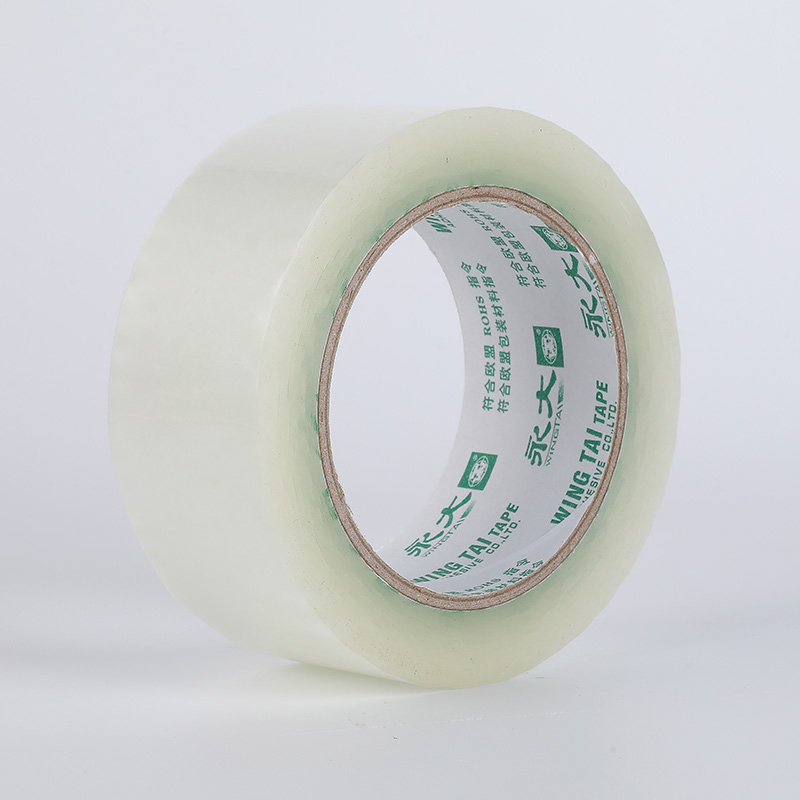
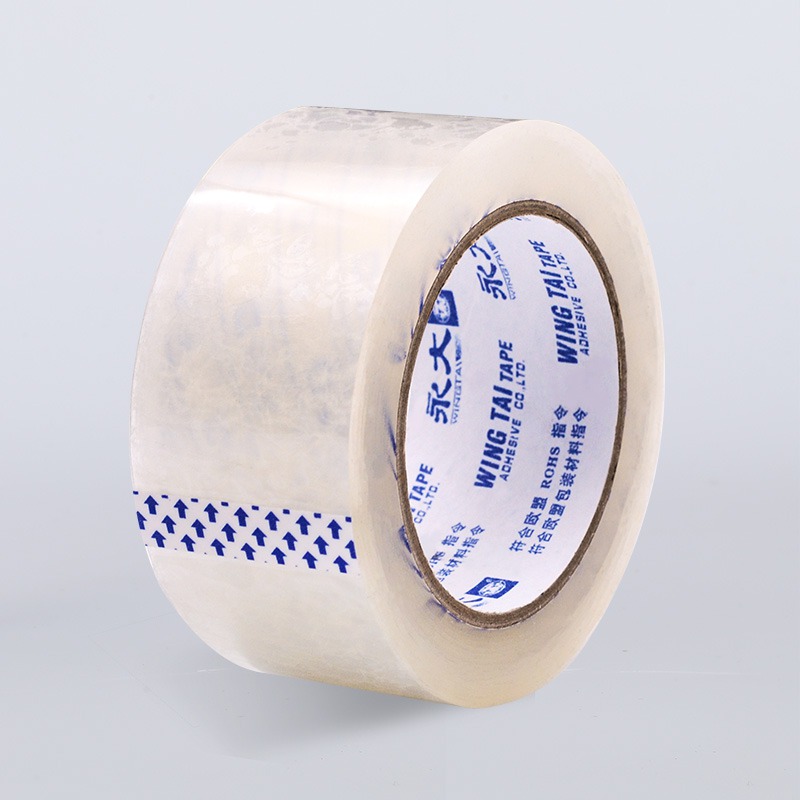
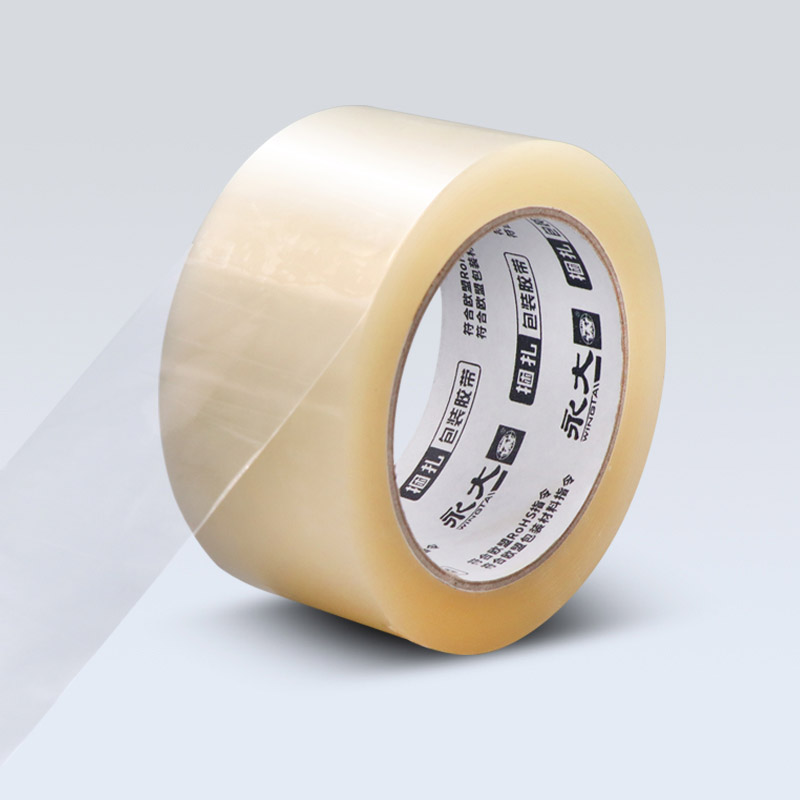
Wingtai provides OEM services to tailor tape specifications based on your local climate and packaging equipment. We analyze your box material and environmental conditions to recommend the correct adhesive thickness, helping you balance budget constraints with performance requirements for a secure supply chain.
Customization is Key
You are not stuck with a generic product. At Wingtai, we can adjust the micron thickness of the glue. If you love the high peel strength of hot melt but need slightly better temperature resistance, we can tweak the formula.
If you are unsure which tape works for your recycled boxes, send us a sample of your cardboard. Our lab will run a peel-adhesion test on steel plates and your specific board, then send you a video report. We want to make sure you don’t overspend on specs you don’t need, or under-spend on tape that fails.
Conclusion
Hot melt tape is the industrial standard for superior peel strength and quiet efficiency, despite its higher cost and weather limitations.