
 EN
EN  ES
ES  PT
PT  RU
RU  FR
FR We see too many boxes burst open during transit because of weak adhesive or thin backing. At our Guangdong facility, we test thousands of rolls to stop this costlyamage and help our clients avoid complaints.
The strongest packing tape depends on the specific stress factor. For pure tensile strength, bi-directional filament tape is superior, handling over 150 lbs/inch. For permanent structural bonding and security, reinforced water-activated tape is the top choice. For general heavy-duty sealing, industrial solvent natural rubber tape offers the best all-around hold.
Let’s look at the science behind these choices so you can pick the right one for your shipments.
The Science of Strength: Tensile, Shear, and Adhesion
Our engineers often explain to clients that “sticky” does not always mean “strong.” Ignoring shear strength causes boxes to pop open even if the tape feels tacky to the touch.
Strength relies on three metrics: tensile strength, which prevents snapping under tension; shear strength, which stops the tape from sliding off the box flaps; and peel adhesion, which measures grip on rough surfaces. The strongest tapes must excel in shear strength to keep heavy cartons sealed during transport.
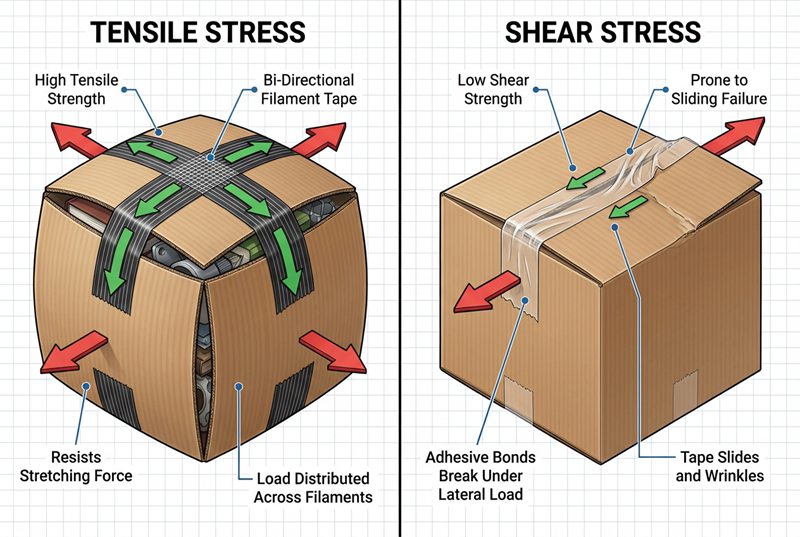
To understand which tape is truly the strongest, we must look at the physics of how tape fails. In our lab, we do not just pull the tape; we test how it behaves under different types of stress. Most people only think about how sticky the tape feels on their thumb. This is a mistake. A tape can feel very sticky but still fail when a heavy box flexes during a truck ride.
Why Tensile Strength Matters
Tensile strength measures how much force is needed to snap the tape. We measure this in pounds per inch of width (lbs/in). Standard acrylic tape usually holds about 20 to 30 lbs/in. This is fine for light clothing but bad for hardware. If you overstuff a box, the outward pressure pushes against the tape. If the tensile strength is low, the backing material (usually BOPP film) will snap. For heavy loads, you need a backing that refuses to break.
The Hidden Role of Shear Strength
Shear strength is the holding power. Imagine the flaps of a box trying to spring open. They push against the tape sideways. This is shear stress. Hot melt adhesives often have high initial stickiness but poor shear strength over time. They might slide or “creep” loose after a few days in a hot container. Solvent natural rubber adhesives, which we use for premium rolls, resist this sliding motion much better.
Peel Adhesion and Surface Contact
Peel adhesion is the force required to rip the tape off the box. This depends heavily on the box quality. Many modern boxes use recycled cardboard. These boxes have short fibers and lots of dust. A standard adhesive might not wet out (flow) into these fibers. You need a thick, aggressive adhesive to grip this rough surface.
Here is a breakdown of how different metrics affect performance:
| Metric | What It Measures | Why It Is Critical for Heavy Boxes |
|---|---|---|
| Tensile Strength | Resistance to snapping | Prevents the tape from breaking when the box bulges. |
| Shear Strength | Resistance to sliding | Keeps the box flaps closed during long storage or vibration. |
| Peel Adhesion | Grip on the surface | Stops the tape from lifting off dusty or recycled cardboard. |
| Thickness (Mil) | Total density of film + glue | Thicker tapes (3.0+ mil) resist punctures and hold more glue. |
Tape Hierarchy: From Consumer Grade to Industrial Power
We export jumbo rolls to Korea daily, and we see distributors confuse consumer-grade hot melt with industrial options. This confusion leads to product failure and unhappy end-users who blame the supplier.
Filament tape sits at the top of the strength hierarchy for bundling heavy loads. Reinforced water-activated tape follows for structural sealing. Industrial solvent natural rubber tape ranks third for all-purpose heavy-duty use, while standard hot melt and acrylic tapes sit at the bottom, suitable only for lighter, short-term packaging.

Not all tapes are created equal. In our production lines, we adjust the formulation of the adhesive and the type of backing material to create different tiers of strength. Understanding this hierarchy helps you choose the right product for your specific load.
Tier 1: Filament Tape (The Structural King)
This is not a standard sealing tape. It is a strapping tool. We embed fiberglass strands into the film. You can get mono-directional (strands run one way) or bi-directional (cross-weave). Bi-directional is the strongest. It has a tensile strength that can exceed 300 lbs/in. You cannot tear this by hand. It is used to bundle heavy pipes or reinforce the bottom of a heavy appliance box. However, it does not seal the corners well because it is stiff.
Tier 2: Reinforced Water-Activated Tape (WAT)
This is what large fulfillment centers use. It is made of kraft paper reinforced with fiberglass threads. The adhesive is starch-based and activates with water. Once it dries, it becomes part of the box. It does not just stick; it fuses. If you try to remove it, you destroy the box. This provides the highest security and structural rigidity.
Tier 3: Solvent Natural Rubber (Industrial Grade)
If you need a pressure-sensitive tape (one that sticks without water), this is the best option. Unlike hot melt, natural rubber works well in cold warehouses and dusty environments. It has a long polymer chain that provides excellent shear strength. It costs more to produce, but it does not fail on heavy, recycled cartons.
Tier 4: Hot Melt and Acrylic PP packing tape
Hot melt is the standard “heavy duty” tape you see in stores. It has high quick tack (sticks instantly) but fails in extreme heat or cold. Acrylic is the standard clear tape. It lasts a long time in the sun (good UV resistance) but has lower holding power for heavy weights.
Below is a comparison of these types based on our manufacturing data:
| Tape Type | Tensile Strength (Approx.) | Best Use Case | Weakness |
|---|---|---|---|
| Bi-Directional Filament | 150 – 300+ lbs/in | Bundling, Palletizing, Extreme Weight | Does not seal dust out; expensive. |
| Reinforced WAT | 60 – 80 lbs/in | Security Sealing, Recycled Cartons | Needs a water dispenser machine. |
| Solvent Natural Rubber | 30 – 50 lbs/in | Cold Storage, Heavy Shipping | More expensive than hot melt. |
| Hot Melt (Heavy Duty) | 25 – 40 lbs/in | Automated Machine Sealing | Yellows over time; weak in heat. |
| Standard Acrylic | 20 – 30 lbs/in | Lightweight E-commerce | Low tensile strength; snaps easily. |
Top Product Recommendations for Heavy Loads
When we develop custom solutions for electronics exporters, they demand tapes that survive drops. Using the wrong tape for high-value items ruins reputations and increases insurance claims.
For extreme weight, use bi-directional filament tape to reinforce the box structure. For high-security shipping, choose reinforced water-activated tape. If you need a pressure-sensitive option for cold or dusty environments, select a solvent natural rubber tape with a thickness of at least 3.0 mil for reliable performance.
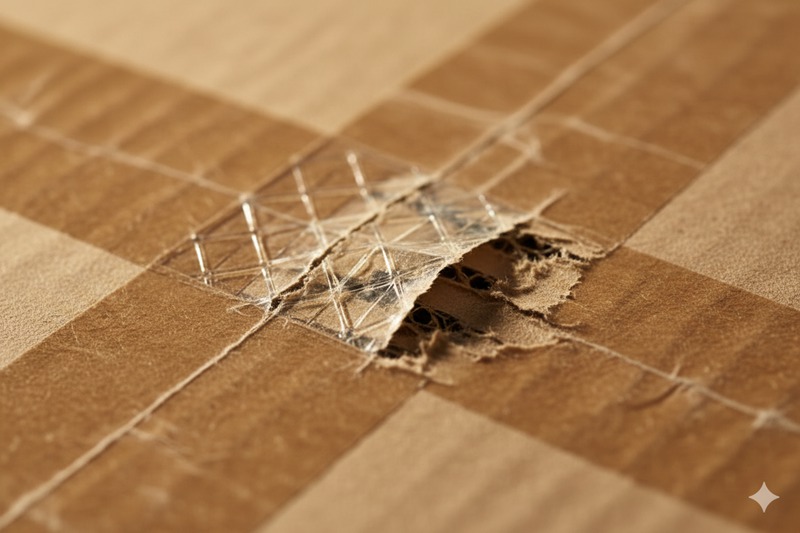
Choosing the right product means matching the tape specs to your box weight and environment. Here is how we advise our professional clients who import jumbo rolls for converting.
The Hybrid Method for Maximum Safety
For the absolute strongest package, do not rely on one tape. Use a hybrid approach. First, seal the center seam with a high-quality Solvent Natural Rubber tape (at least 3.0 mil thick) or Reinforced WAT. This keeps the dust and moisture out. Then, apply Bi-Directional Filament tape in two bands across the width of the box and one band lengthwise. This acts like a plastic belt. It takes the physical stress off the cardboard.
Why Thickness (Mil) is a Quality Indicator
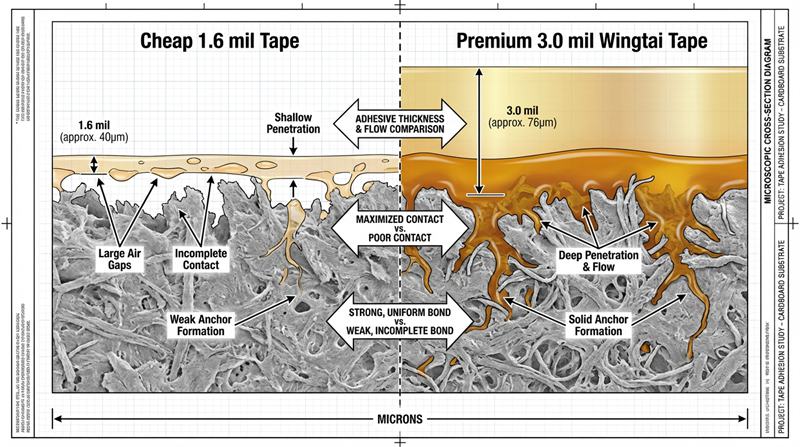
In our industry, thickness is measured in “mils” (thousands of an inch). A standard cheap tape is 1.6 to 1.9 mil. This is mostly thin plastic and very little glue. For heavy boxes (over 30 lbs), you must use a tape that is at least 2.5 mil to 3.0 mil. The extra thickness usually comes from a thicker adhesive layer. This allows the glue to flow into the valleys of the cardboard surface. If the tape is too thin, it only touches the peaks of the paper texture, resulting in a weak bond.
Specific Recommendations for Distributors
If you are supplying factories, you need consistency.
- For Cold Chain: Avoid hot melt. It becomes brittle and pops off in the freezer. Use Solvent Natural Rubber.
- For Export Shipping: Use Reinforced WAT. It shows evidence of tampering. If someone opens the box at customs or in transit, the receiver will know immediately.
- For Heavy Hardware: Use Filament tape. It is the only thing that stops metal parts from piercing through the box structure.
Here is a guide on what to buy based on box weight:
| Box Weight | Recommended Tape Type | Minimum Thickness |
|---|---|---|
| Under 20 lbs | Standard Acrylic | 1.9 mil |
| 20 – 40 lbs | Heavy Duty Hot Melt | 2.5 mil |
| 40 – 60 lbs | Solvent Natural Rubber | 3.0 mil |
| Over 60 lbs | Hybrid (Rubber + Filament) | 3.0 mil + Filament |
Conclusion
To get the strongest seal, match the tape to the stress. Use filament for tension, WAT for security, and solvent rubber for tough environments.